From Field to Future
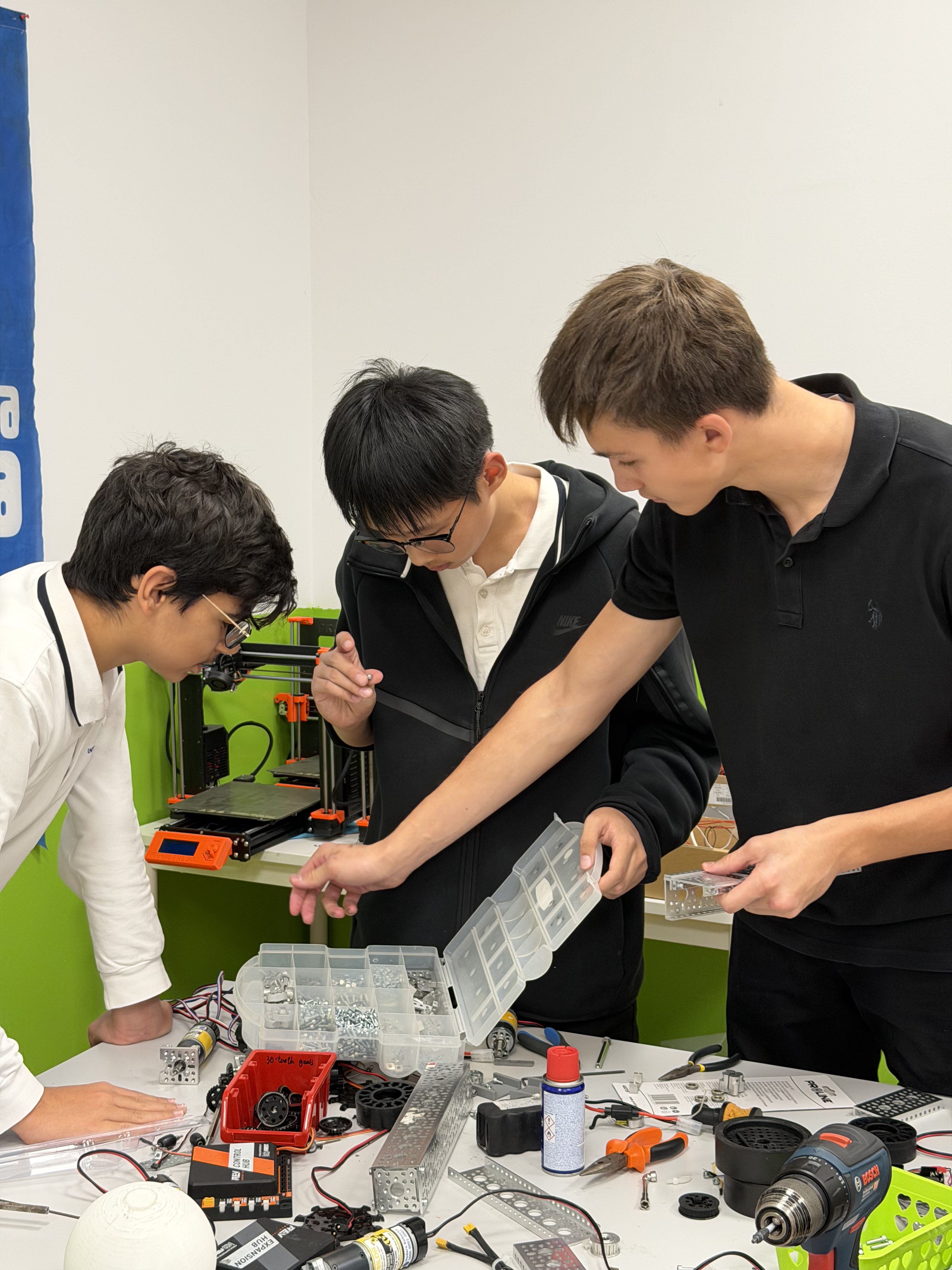
In FTC robotics, every mechanism we build reflects a real-world innovation. The systems we design for competition aren’t just strategies for scoring points — they are simplified versions of the technologies that power industries, shape cities, and advance science.
Grounding our robots, the linear slide provides reach and controlled elevation, much like cranes and forklifts that lift materials in construction and logistics. Its strength lies in precision — translating rotational motion into smooth, stable extension.
The intake system embodies motion and efficiency. Designed to collect and transfer game elements, it mirrors the conveyor belts of factories and the harvest mechanisms of modern agriculture, where movement and coordination define productivity.
The arm and claw grant dexterity and control. From automotive assembly lines to space exploration, robotic arms follow the same principles we apply on the field: flexibility through articulation, precision through design.
Finally, the drivetrain transforms energy into movement. Whether using Mecanum Wheels for multidirectional agility or tank drives for power and traction, these systems echo the logic of real vehicles and exploration robots that must adapt to their terrain.
Through these mechanisms, FTC robotics bridges classroom learning with the real engineering world. Each servo and screw teaches us more than competition — it teaches us the language of innovation.